
About Octarca

A story of data tools and analysts

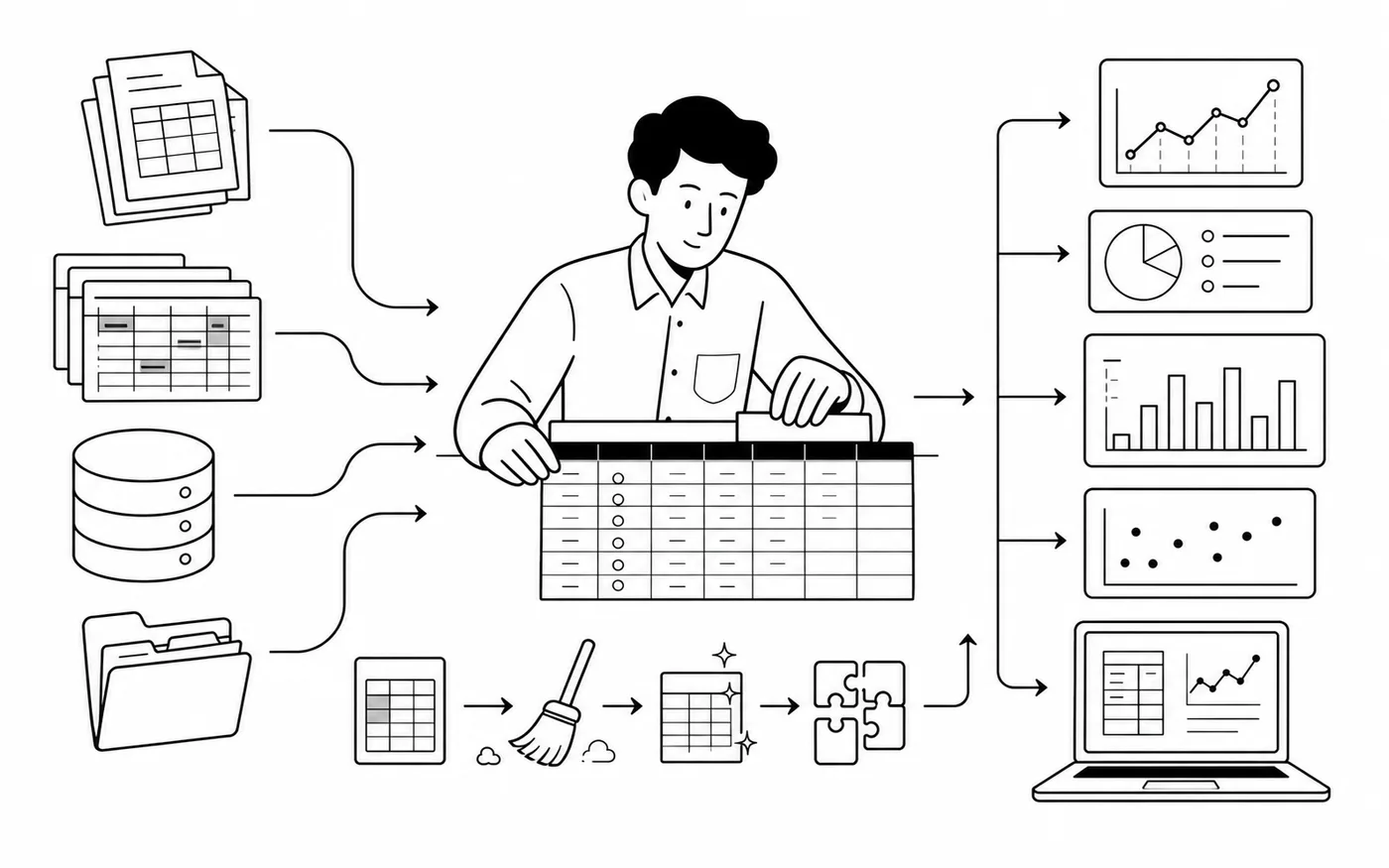
A line illustration of an analyst facing a table that is not ready for analysis.

A table that cannot yet be analyzed

If you are reading this, you may know the moment: the project has started, the question is clear, but what sits in front of you is a table that cannot yet be analyzed.

Fields are inconsistent, formats are uneven, sources are scattered, and definitions are ambiguous. The problem is clear; what stands in the way is organizing, checking, and confirming again and again.
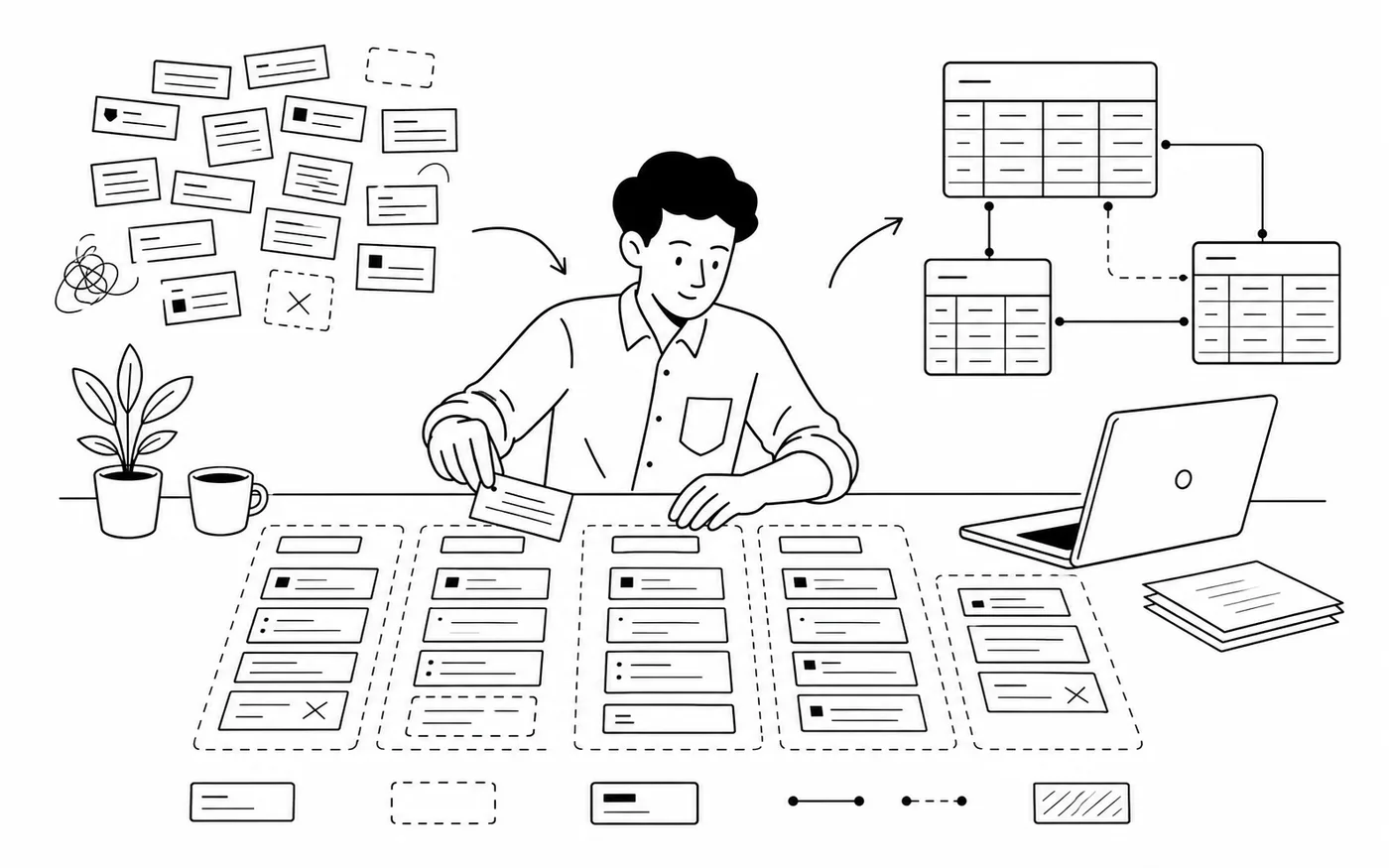
A line illustration of an analyst organizing scattered fields, files, and relationships before analysis.

Analysts first become organizers

Analysts should spend their time understanding problems, building models, and explaining results, but they are often forced to become organizers of data first.

This step is rarely seen, yet it decides whether the analysis can move forward smoothly, whether the conclusion is reliable enough, and how long a project remains stuck.

To understand why this step keeps appearing, and why Octarca begins here, we need to return to the history of data tools.

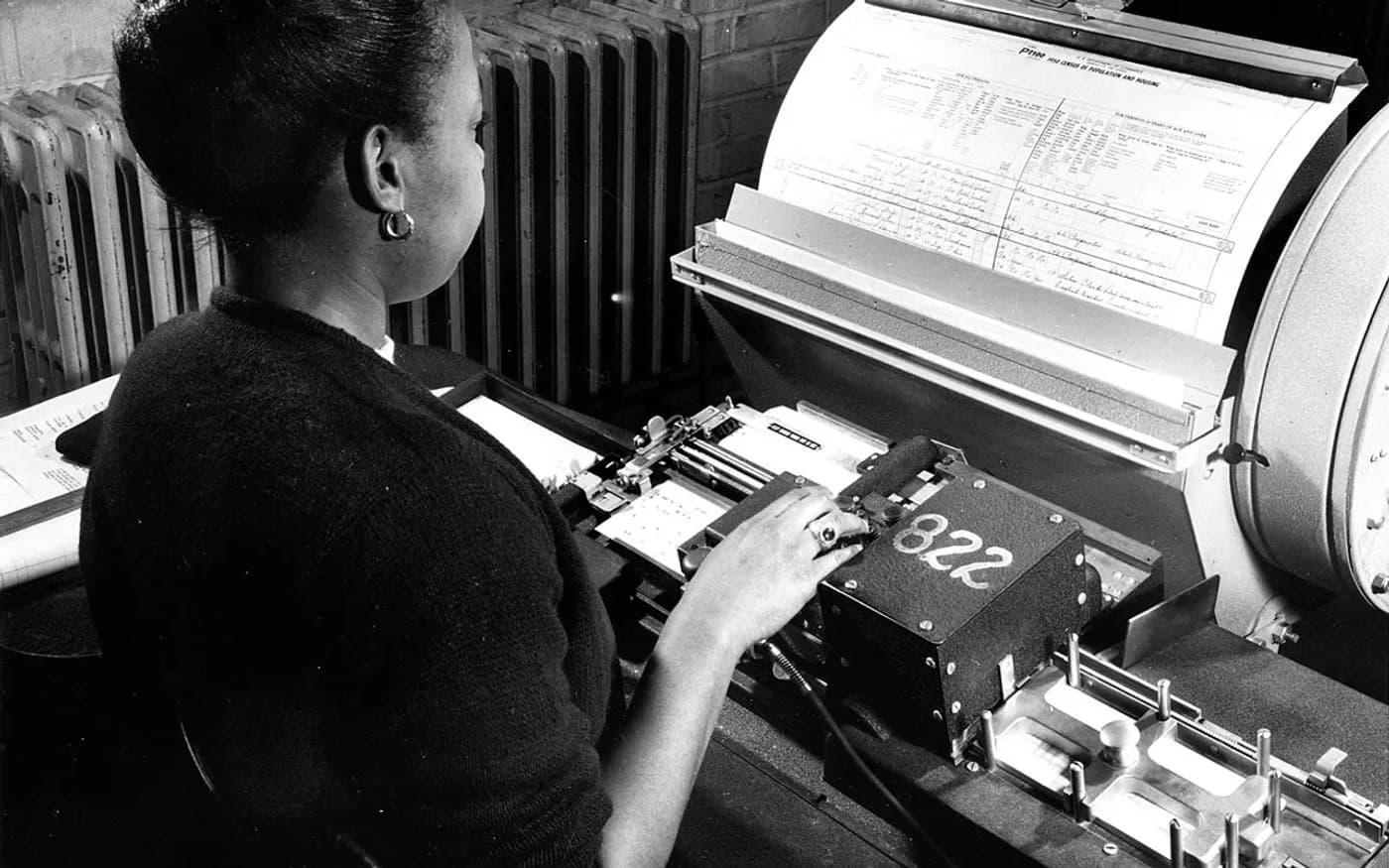
A historical punch-card or mainframe-era data processing scene.

Data once had to be translated for machines

Early data analysis work happened around punch cards, mainframes, batch jobs, and machine rooms built for specialists.

Before a machine could truly process data, people first had to record, encode, and organize information into a form the machine could read.

Machines could calculate, but only after data had been converted into a machine-readable form.

A line illustration of spreadsheet data becoming visible on a personal screen.

Spreadsheets brought data in front of people

The spreadsheet changed that relationship. Data moved onto personal screens, into cells people could see, edit, copy, and question.

For the first time, working with data felt as direct as working with paper.

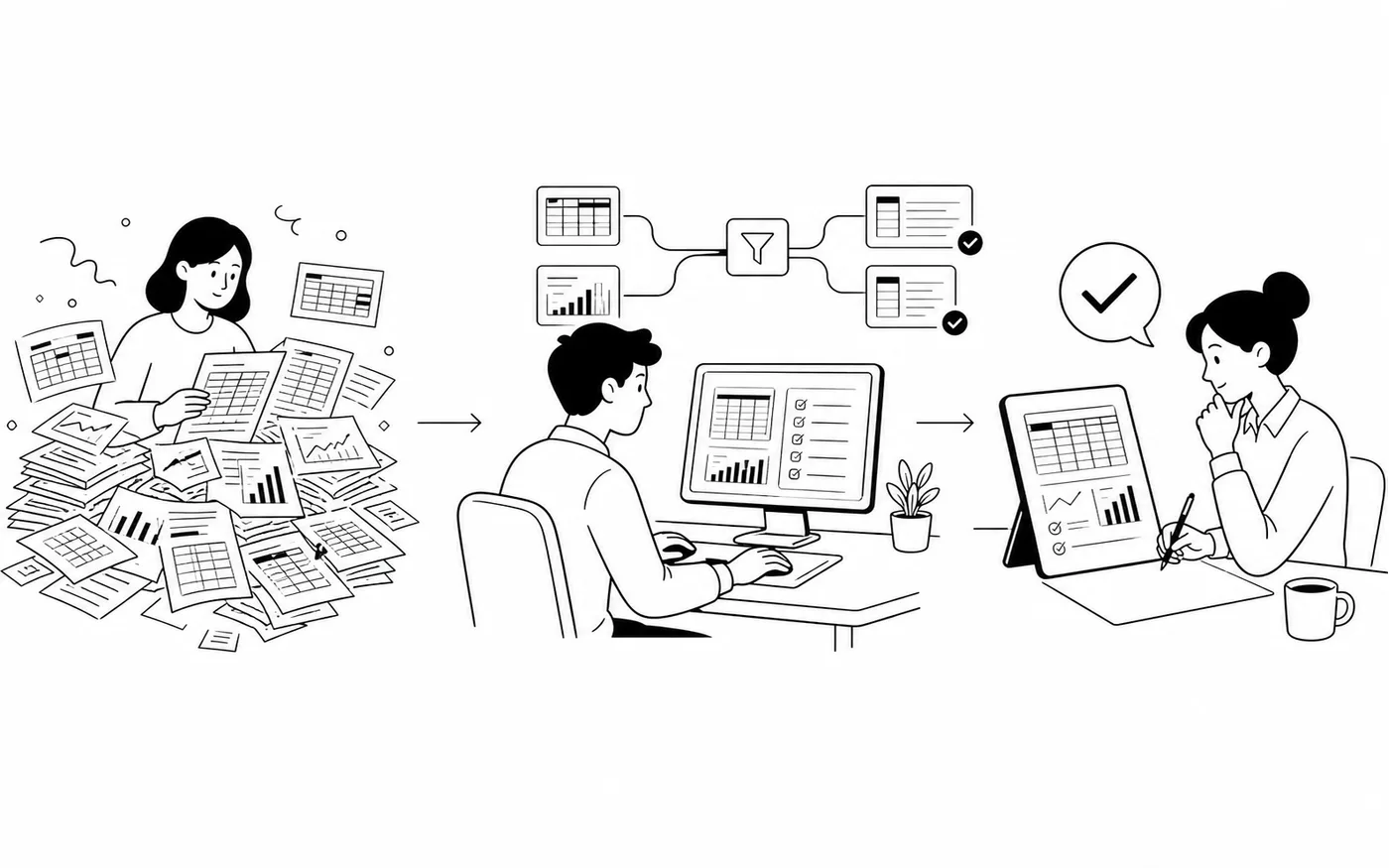
A line illustration of CSV, spreadsheet, database, and source data being prepared for analysis tools.

Today, data still has to be prepared for tools

Statistical software, programming languages, databases, and AI tools make analysis deeper, faster, and easier to reuse.

Before they run, analysts still have to turn real data scattered across CSVs, spreadsheets, databases, and different sources into clear fields, consistent definitions, and explicit relationships.

Only after data is prepared does analysis truly begin.

A line illustration of an analyst returning to models, interpretation, and conclusions.

Let analysts return to analysis itself

From punch cards to spreadsheets, from statistical software to AI tools, data tools have kept changing the relationship between analysts and data.

Tools have become stronger and analysis has become faster, yet data preparation still often pulls analysts back to the starting line.

We want analysts to step out of repetitive data organizing and leave more time for problems, models, explanations, and conclusions.

A line illustration of Octarca turning messy source data into a clear reusable result package.

Octarca begins here

Octarca is built for this step. It is an AI Native data workspace for turning messy real-world data into clear, trustworthy, reusable, and deliverable outputs.

It stands between real data and professional analysis tools, turning the most overlooked and time-consuming data preparation into a process that can be organized, reused, and reviewed.

When data is ready, analysis truly begins.

To make every dataset easy to work with.

让天下没有难处理的数据。