
Inspiration · July 19, 2026 · 8 min read
The Circle, the Eight, and the Truth
Every age encounters its own eight arcminutes. When they appear, what matters most is not rushing to erase them, but having the courage to seek the truth.
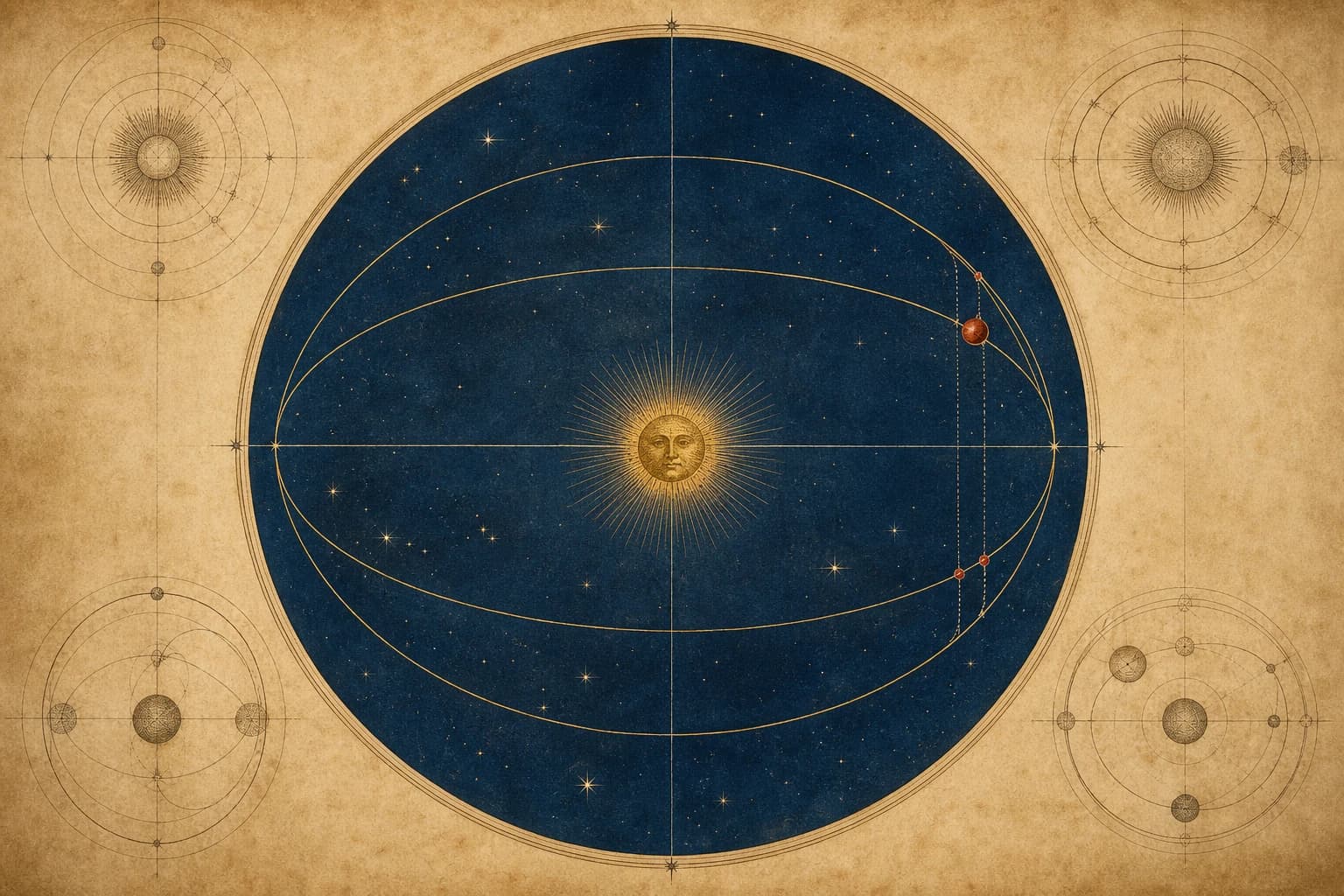
Every age has a perfect shape that it mistakes for truth.
For the astronomers of antiquity, that shape was the circle.
A circle has neither beginning nor end. It is uniform, symmetrical, and seems self-evidently right. Aristotle held that the heavens belonged to a realm more perfect than the earthly world and therefore had to move along the most perfect path. Ptolemy later built a vast system of deferents, epicycles, and eccentric circles. It was complicated, yet it explained most of what people saw when they looked up.
More than a thousand years later, Copernicus restored the Sun to the center of the planetary system, but he still did not let go of the circle.
Earth could leave the center of the universe. The circle could not.
The strongest authorities are rarely maintained by command. They simply look so natural that people stop noticing they are assumptions at all.
At the end of the sixteenth century, Tycho Brahe began measuring the sky again.
There were no telescopes yet. Tycho built enormous quadrants and armillary spheres, refined their scales, calibrated them repeatedly, recorded the same star on different nights, and compared the results accumulated over years. He did this for more than two decades.
Posterity readily remembers those who formulate laws. It less often remembers that, before a law can appear, someone must first measure the world precisely enough.
Tycho measured Mars to within one or two arcminutes, near the limit of naked-eye astronomy. He proposed no new law, yet he changed the conditions under which every law would be judged. He made the sky clear enough that the cracks in old theories could no longer be explained away.
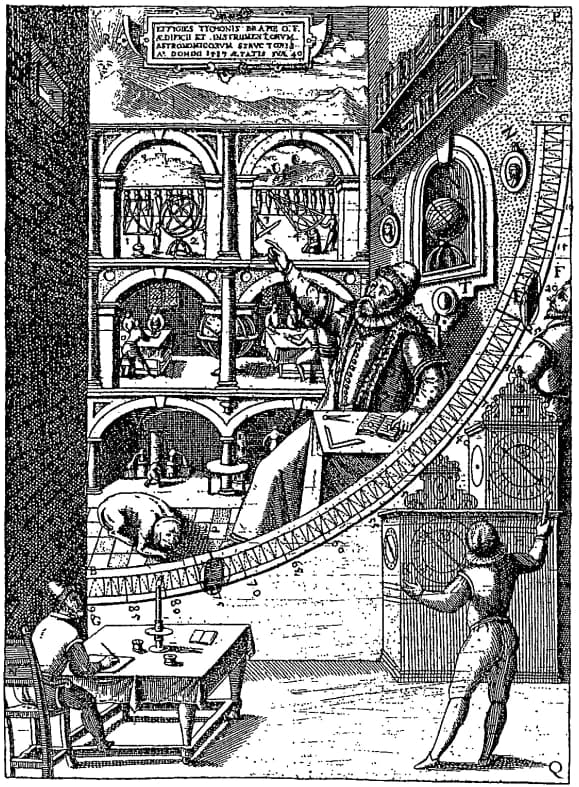
In 1600, Kepler arrived in Prague. Tycho gave him Mars.
Kepler believed in heliocentrism and in a mathematical order behind the universe. But he was not a born rebel. Like his contemporaries, he believed the circle held a special and perfect place.
He began with circles, adjusting their centers, speeds, and many other parameters until he produced a remarkably successful model. At most positions, it nearly matched the observations.
But at a few positions, it did not.
The difference was eight arcminutes.
Eight arcminutes is about 0.13 degrees, roughly one quarter of the Moon's apparent diameter. Earlier models could miss by ten arcminutes without causing much concern. Kepler could easily have stopped. He already had a model persuasive enough for his contemporaries, Tycho was dead, and no one would have asked him to put all of astronomy on trial for a difference the naked eye could barely distinguish.
But Kepler knew Tycho's observations were precise enough.
If the observations deserved to be trusted, then it was no longer the eight arcminutes that should be doubted. It was the circle.
Kepler later wrote in New Astronomy that these eight arcminutes could not be ignored. They had opened the road to the reform of astronomy.
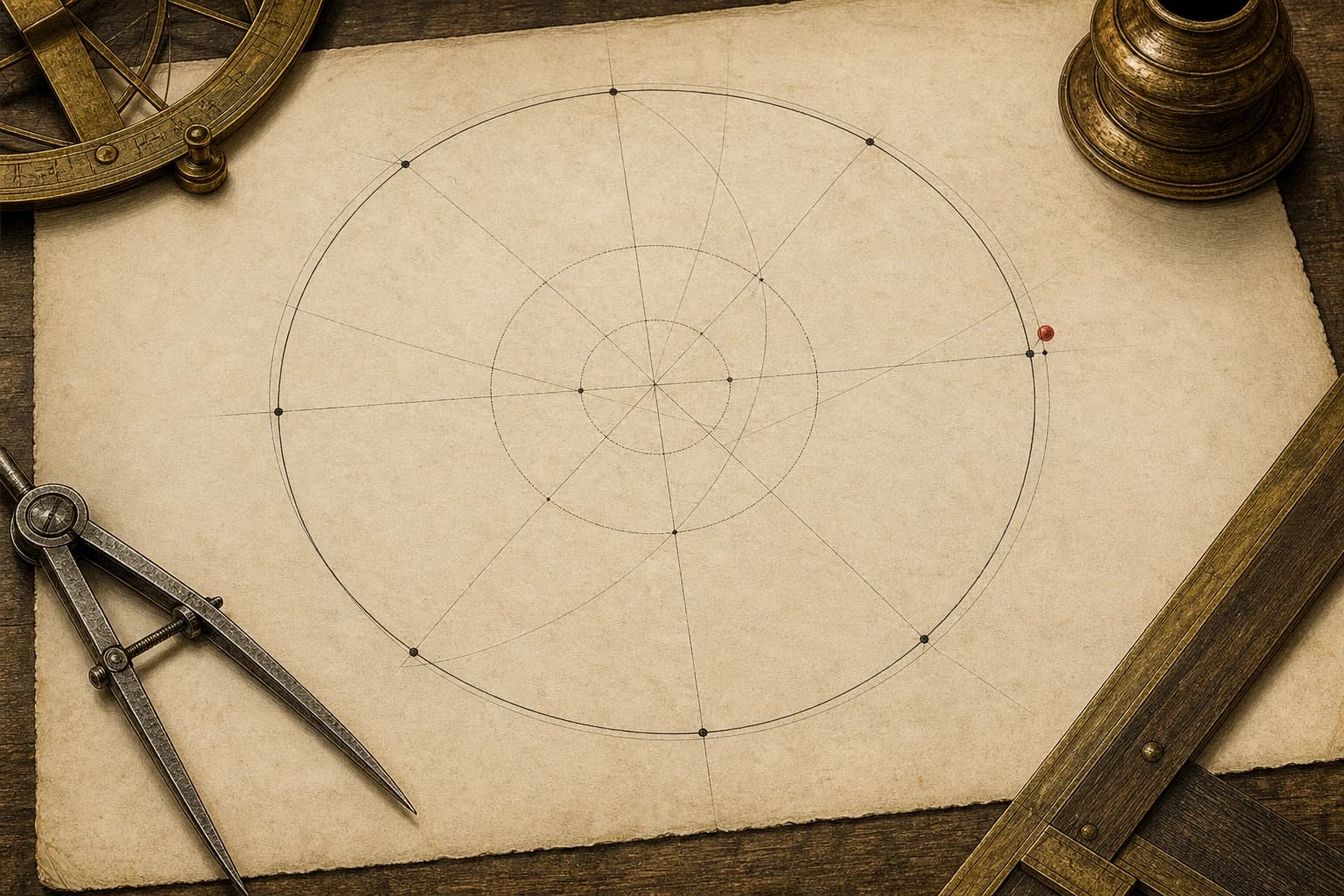
He did not leap directly from eight arcminutes to an ellipse. He recalculated the positions of Earth and Mars, tried new circles, different speeds, and various egg-shaped paths, then carried every result back to Tycho's records for another test. Some calculations were so laborious that he repeated the same kind of procedure at least seventy times.
What he was protecting was not an outlier.
It was a fact no one had yet explained.
In the end, he relinquished not only a tradition that had lasted two thousand years, but an order of the universe he had once deeply believed. Mars moves in an ellipse, with the Sun at one focus. The sky did not move in the perfect way people had imagined, yet it revealed another, deeper order.
The circle was more perfect.
The ellipse was more true.
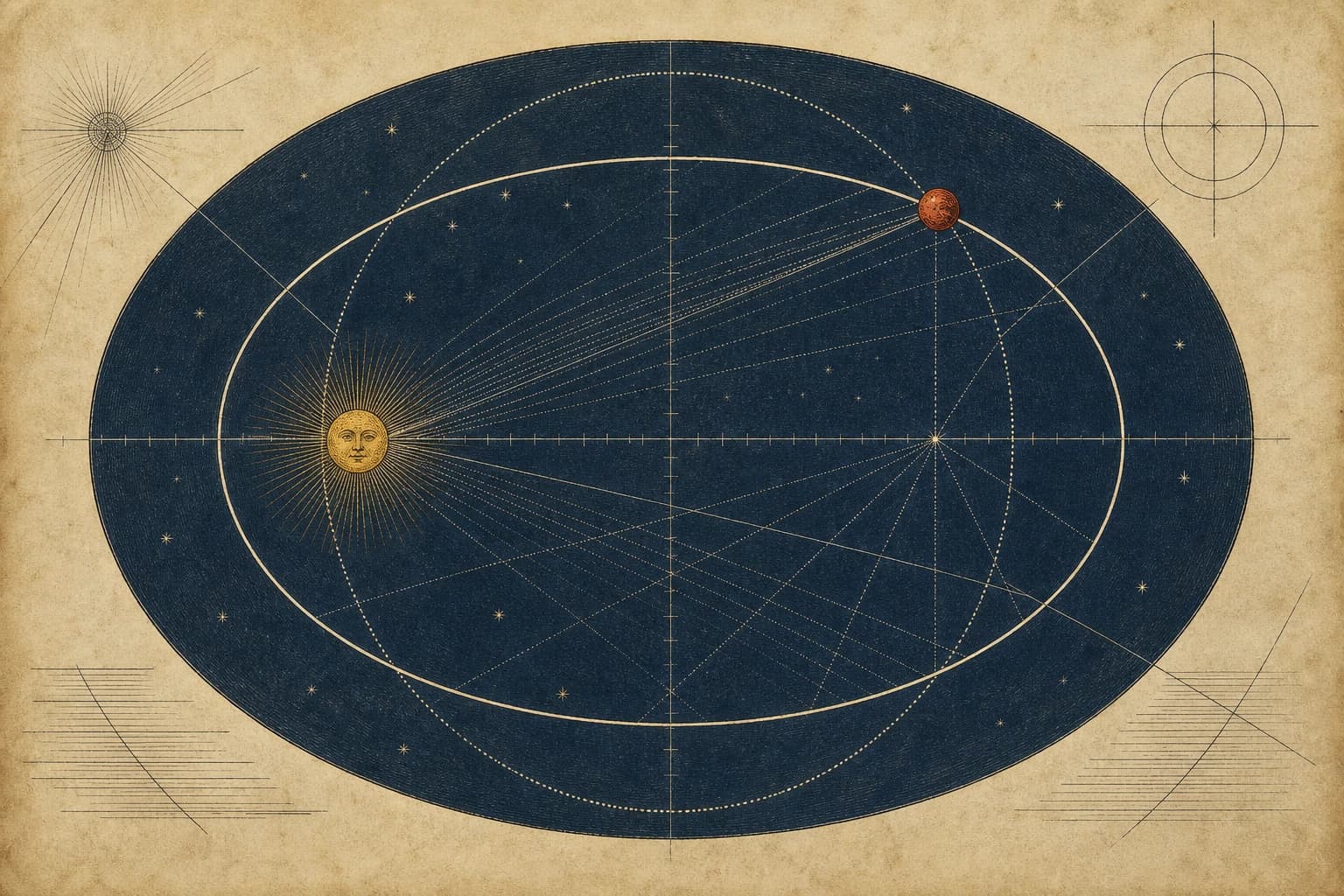
When Kepler published New Astronomy, he did not yet know about universal gravitation. He had discovered how the planets moved, but could not fully explain why. Decades later, Newton carried those laws forward into a far broader physical system.
The eight arcminutes thus came to mean more than the orbit of Mars.
A new world rarely arrives as a complete answer. At first it is often only a discrepancy the old theory cannot contain, an untidy line in a calculation, a question everyone thinks can be set aside. The old world has a complete language, established authorities, and beautiful models. The new world may begin with only eight arcminutes.
That is why facts must be preserved with care. When a theory has ruled for long enough, people easily mistake ‘inconsistent with the theory’ for ‘inconsistent with reality.’ What truly expands the boundary of knowledge is often not more evidence for what we already believe, but the thing it still cannot explain.
Kepler lived when computation was extraordinarily expensive. A single adjustment to a model could mean weeks of work by hand.
We are entering another age.
Machines can process information far beyond human capacity in moments, generate thousands of hypotheses, and produce explanations that are fluent and complete. Computation and answers were once scarce. What may become scarcer is the judgment to know why an answer deserves belief.
A system can discover patterns quickly, and it can manufacture them just as quickly. It can help us break an old model, or defend it in more elaborate ways. It can produce a circle that looks utterly complete without telling us that eight arcminutes remain at its edge.
The more powerful technology becomes, the less its direction is determined by technology alone.
It is determined by how the people using it understand evidence, face uncertainty, and allow a small but stubborn fact to change a view they have spent years building.
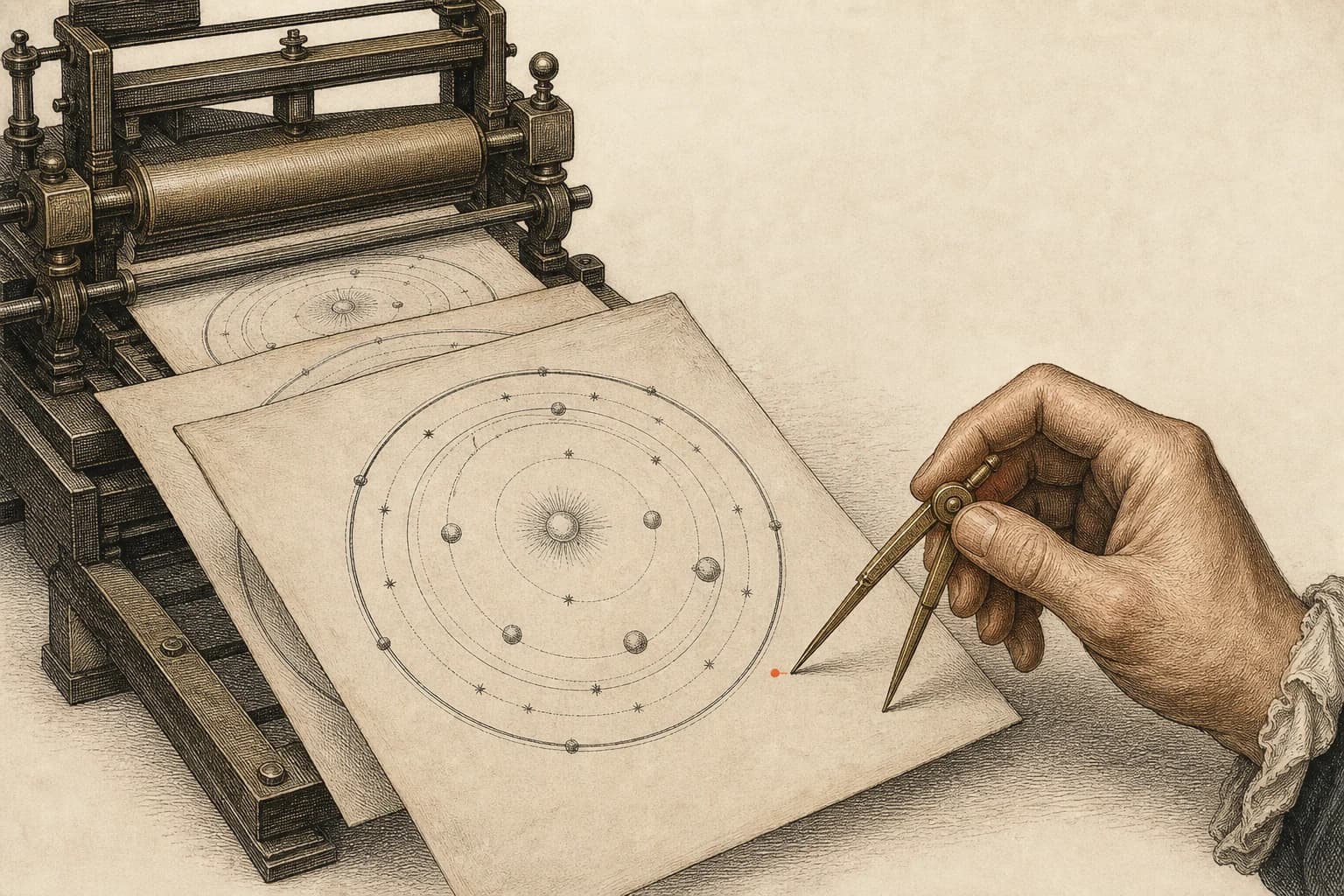
We celebrate people like Tycho. Before reaching for a conclusion, they make the foundations reliable. Their work is not always seen, but it gives every later discovery a trustworthy place to begin.
We also celebrate people like Kepler. They do not demand that reality obey a theory simply because it is old or beautiful. They dare to challenge authority, and they allow evidence to challenge them.
They oppose consensus not to appear different. They simply refuse to rewrite an unexplained fact into a convenient answer.
This spirit belongs not only to astronomy. It belongs to everyone who takes facts seriously, to those who return to the original evidence when everyone else is ready to accept a beautiful conclusion.
Our understanding of the sky did not change because the circle ceased to be beautiful.
It changed because someone decided that beauty could not substitute for truth.
Every age encounters its own eight arcminutes. When they appear, the most important thing may not be to answer at once.
It may be simply not to erase them too soon.
The future may not be hidden inside the most perfect model.
It may be hidden in those eight arcminutes.